
How HALO FastHub actually works.
The technology behind simpler EV charging.
Full technical specification, system architecture and energy management, for engineers, consultants and procurement teams who need the detail before signing off.

Three systems.
One integrated unit.
HALO FastHub brings solar generation, mains power, optional battery storage and intelligent energy management together in one prefabricated system.
This isn’t a charge point with solar bolted on. It’s a complete, intelligently managed energy system.
Solar PV canopy
Solar-first by design.
19.32 kWp of monocrystalline solar PV is integrated into the purpose-built canopy. Generated energy can be used directly for EV charging, with surplus energy available for battery storage or use elsewhere on site.
Mains integration
Works with the grid capacity you have.
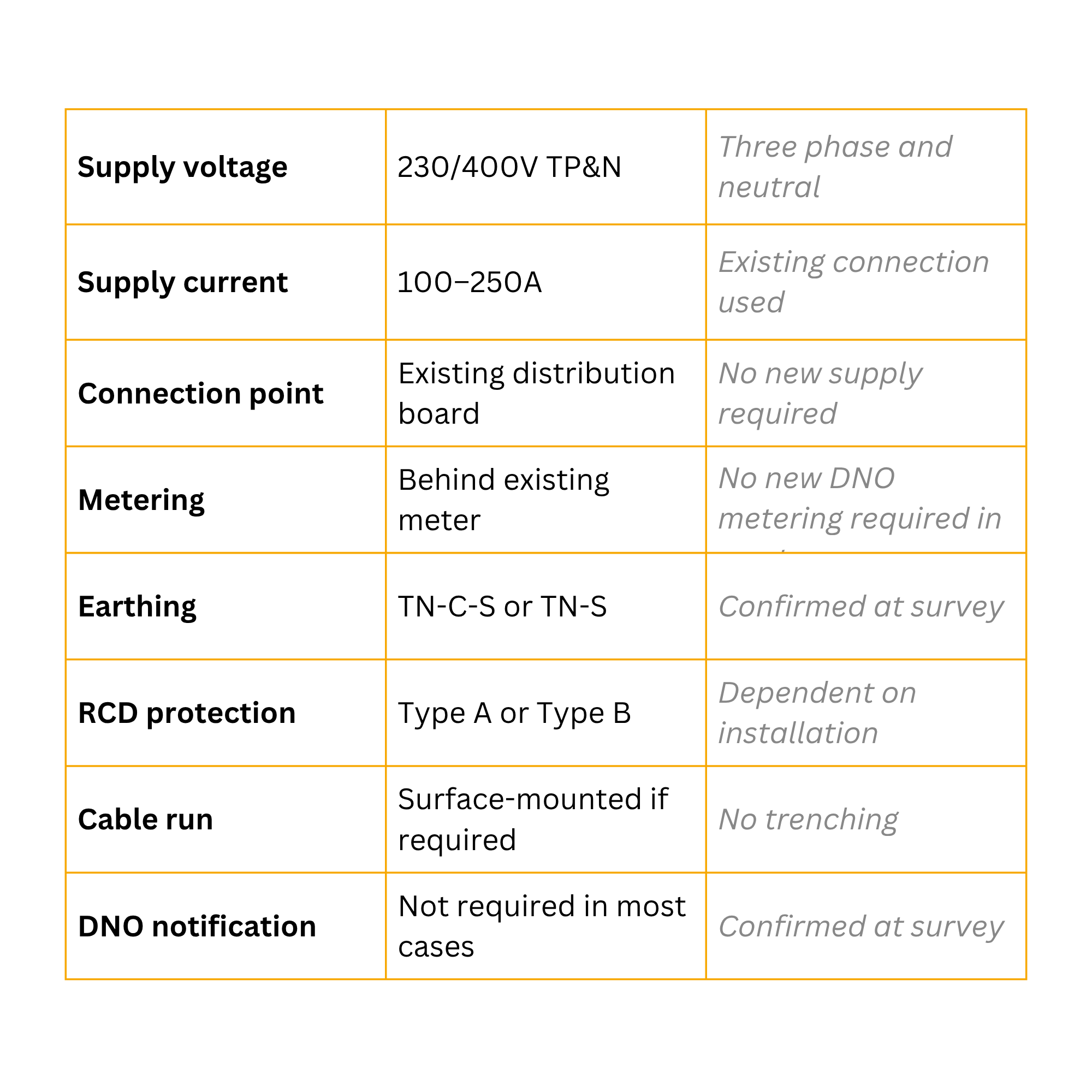
HALO FastHub connects to the site’s existing 230/400V TP&N electrical supply at 100–250A. HALO intelligently manages the power available, helping maximise charging performance without automatically requiring a costly grid upgrade.
HALO Intelligence
HALO decides where the power goes.
HALO coordinates available energy in real time. Dynamic Load Management automatically distributes power across charge points according to availability and demand, while the platform monitors charging infrastructure and provides the operational data needed to manage the system.
Hardware. Performance. Software
Installation and electrical requirements.
Installation and electrical requirements.
Everything your facilities engineer or M&E consultant needs to prepare for HALO FastHub — including footprint, dimensions, supply requirements and connection details.
Space & Access
What HALO needs on site.
01
Ground footprint
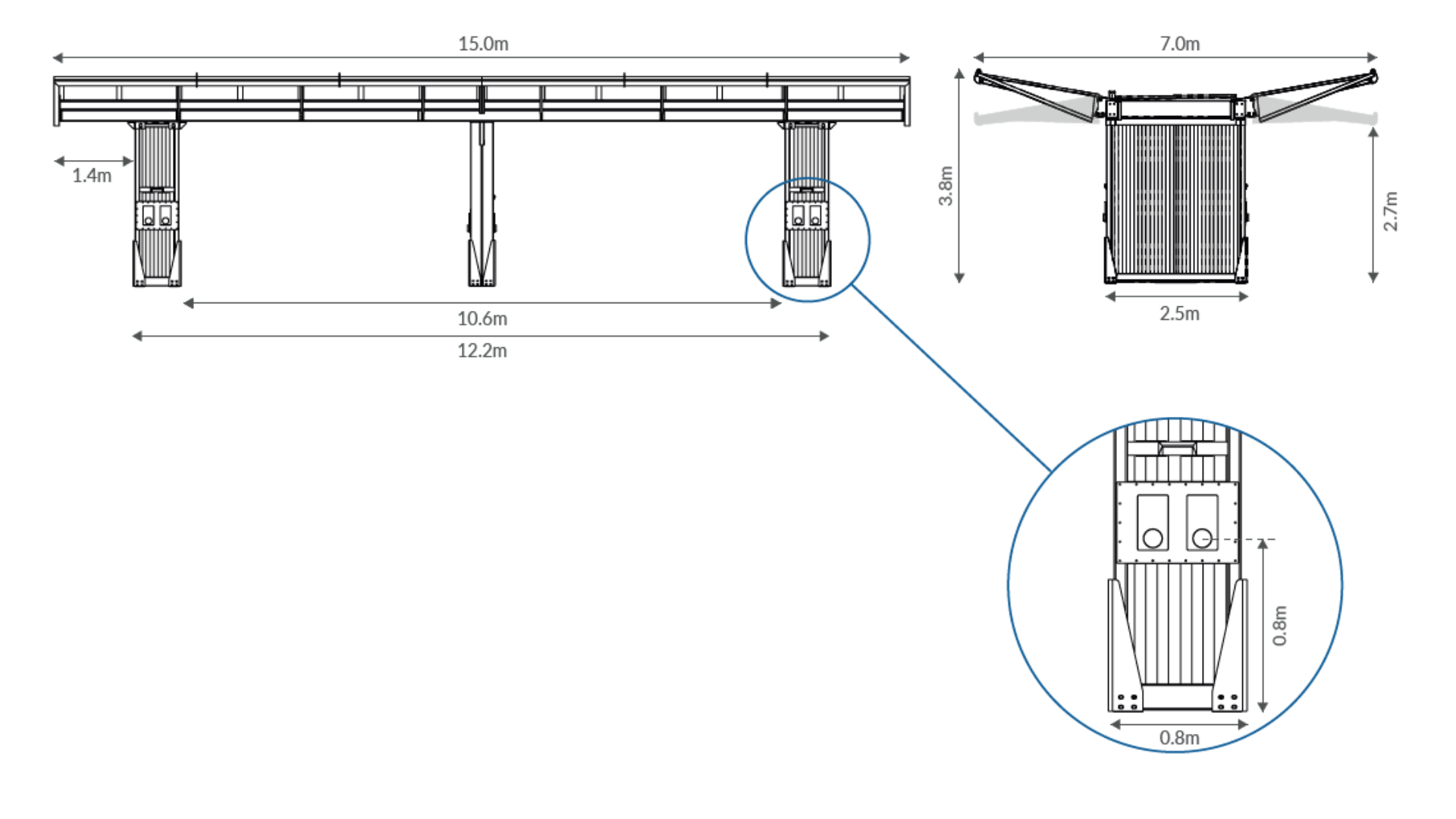
12.2m × 2.5m, based on a 40ft high-cube container equivalent. The central equipment cabinet sits within this footprint.
02
Solar canopy (fully extended)
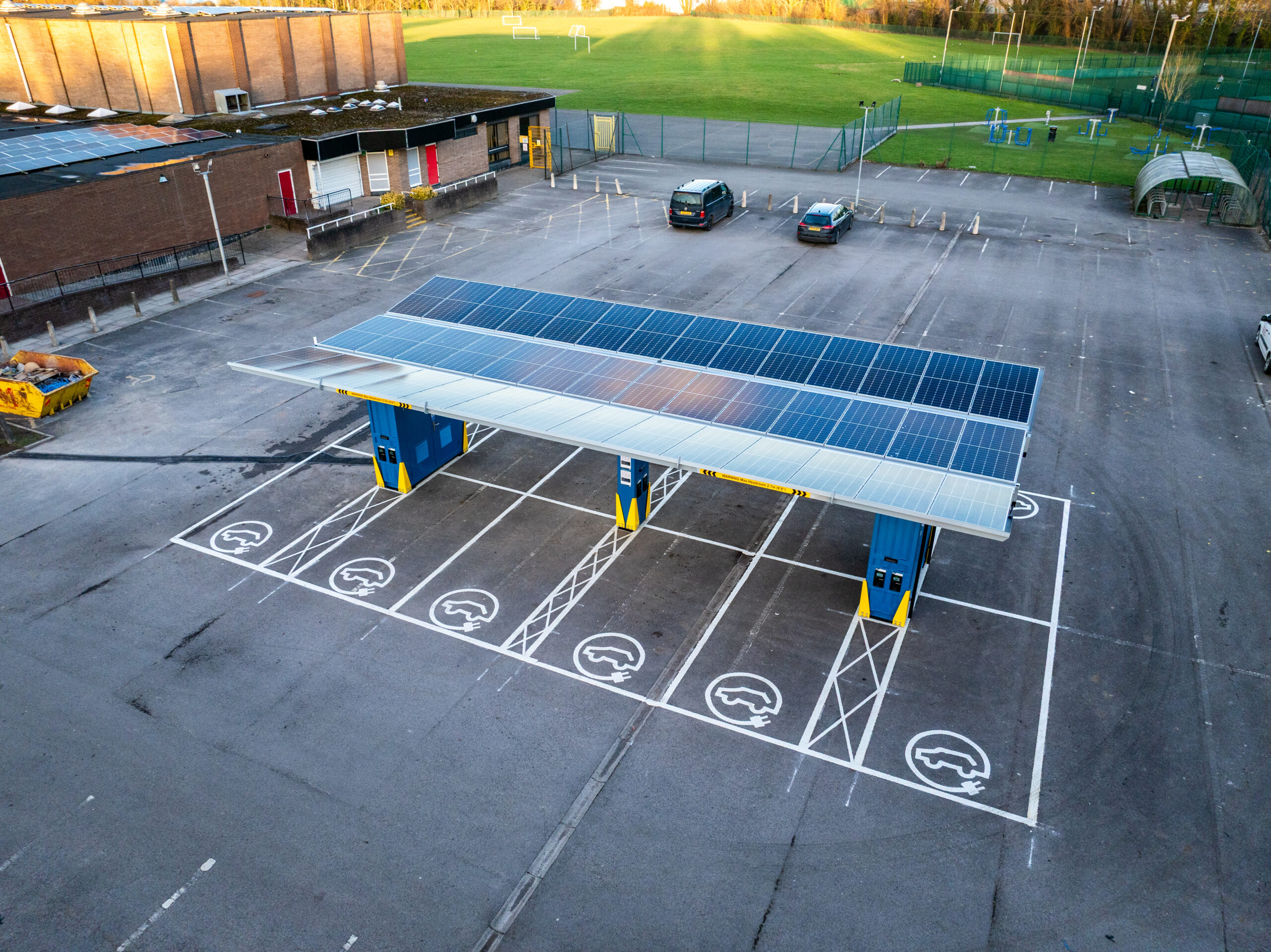
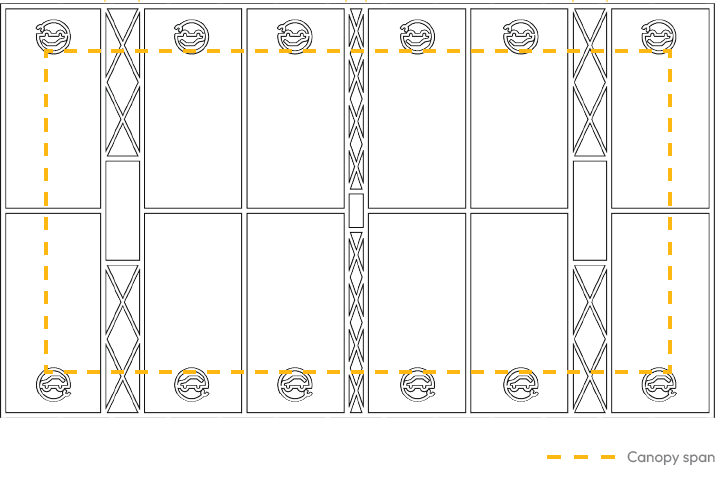
15.0m × 7.0m with the solar canopy fully extended, covering parking bays on both sides of the central equipment cabinet.
03
Recommended parking layout
Recommended layout: 18.22m × 10.10m, accommodating approximately 14 parking spaces. Two outer spaces are designated as accessible EV charging bays, including a traffic exclusion zone.
All bays comply with PAS 1899:2022.
04
Vehicle clearances
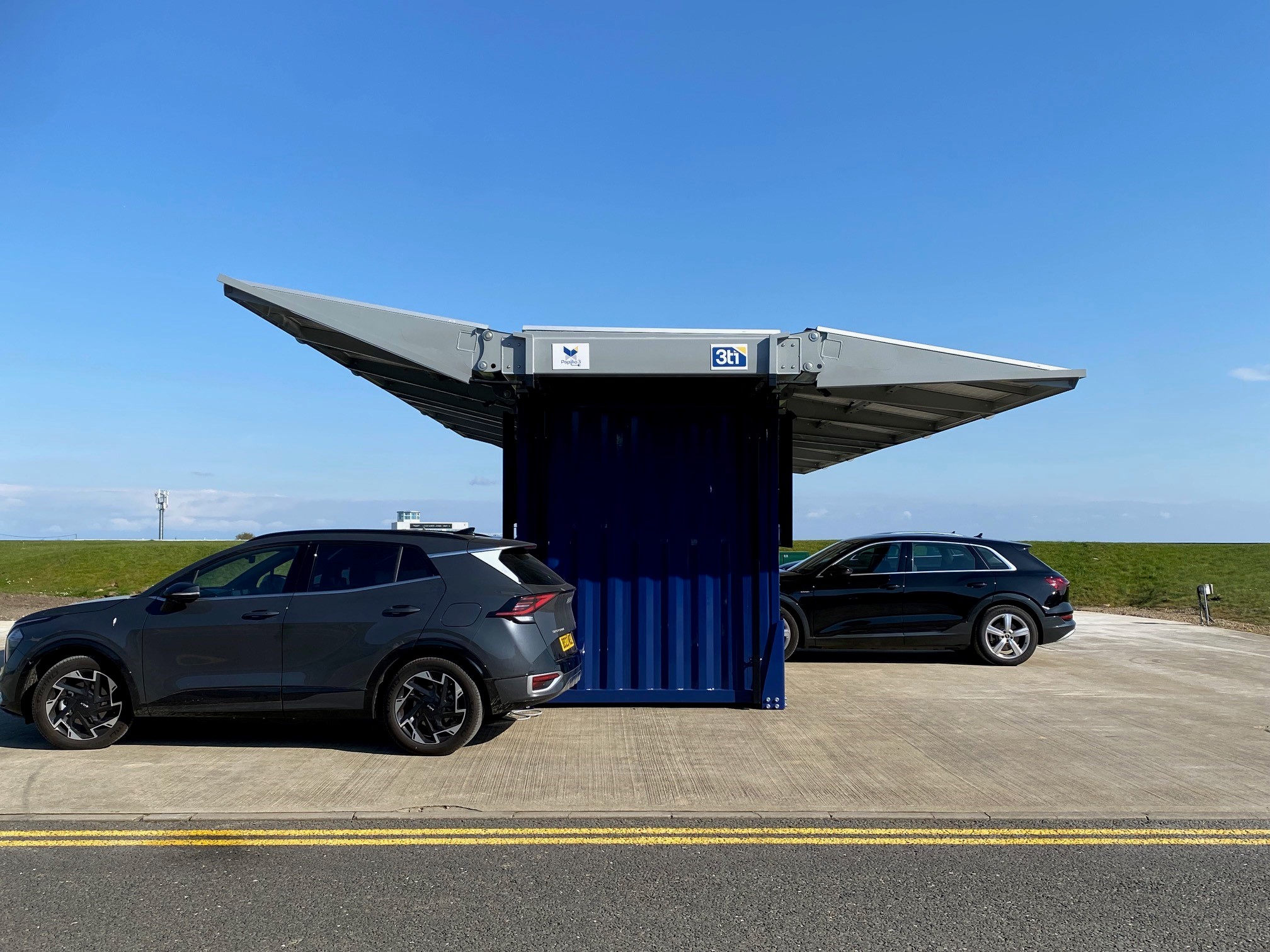
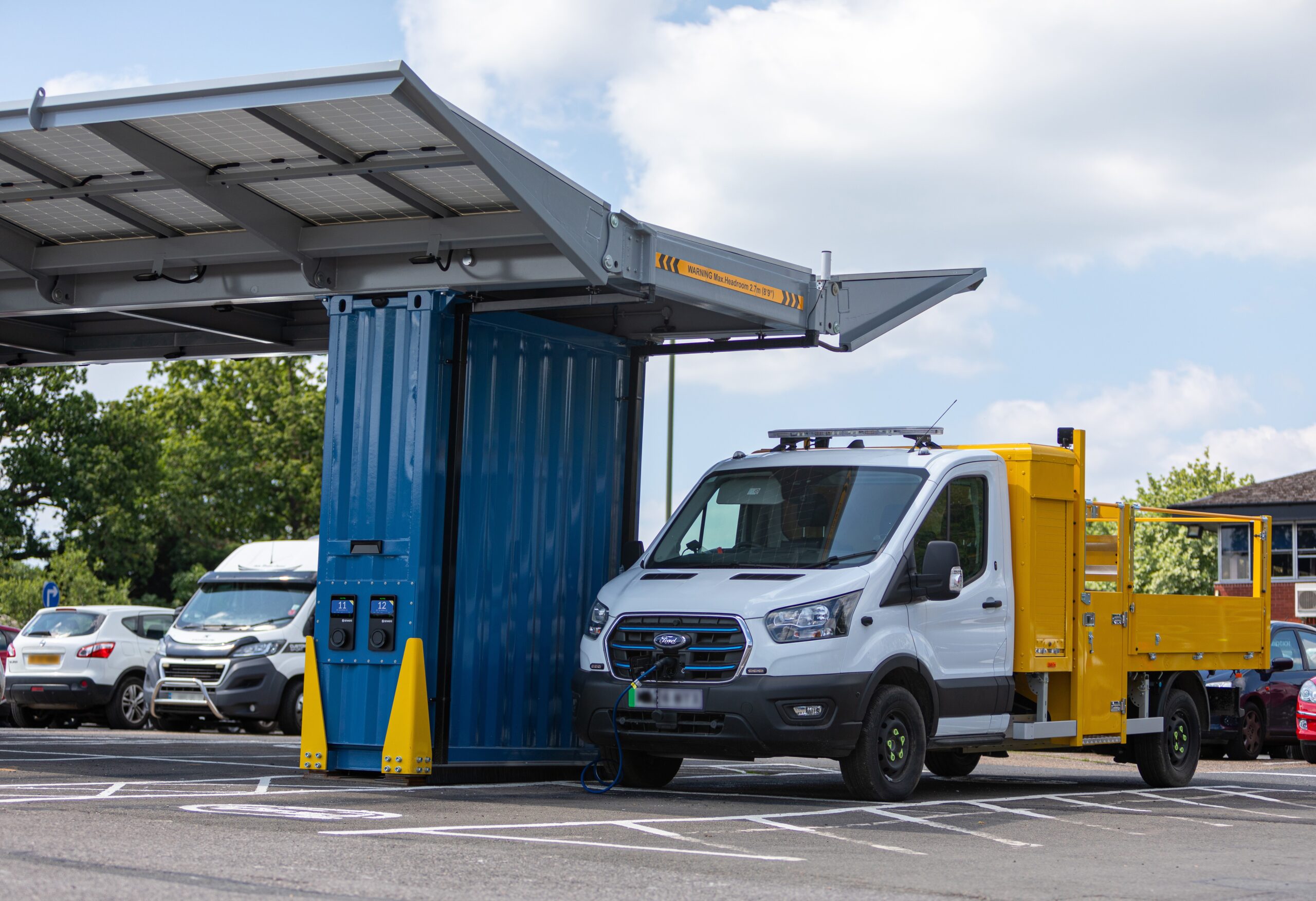
Maximum vehicle dimensions at the canopy’s lowest position:
Width: 2.5m
Length: 5.0m
Height: 2.7m
EV charge points sit 0.8m above ground level, subject to site ground-levelling adjustments.
05
Installation access
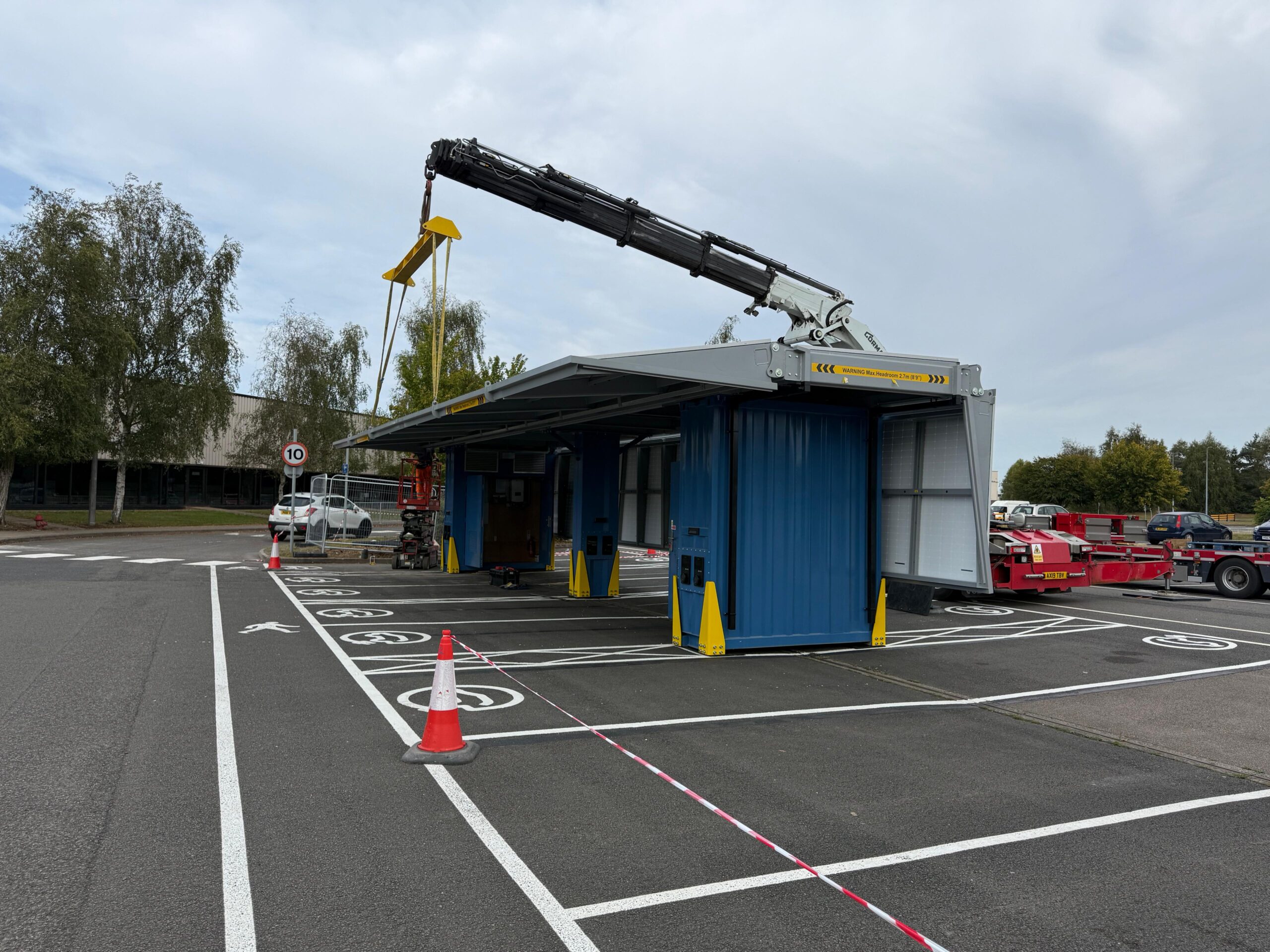
HALO FastHub is installed using a single HIAB crane lift. The access route must accommodate a standard flatbed lorry.
Our site survey team confirms all access requirements during the feasibility stage.
HALO Intelligence
The intelligence behind FastHub
HALO is the energy and charge point management system at the centre of every FastHub. Running continuously, it makes real-time decisions about energy flow, available power and charging demand
Dynamic Load Management
Making more of every kW.
HALO monitors demand across all 12 charge points in real time, dynamically distributing available capacity to maximise charging performance while staying within the power available at your site.
Energy Management
Making more of every kW.
HALO manages solar, battery storage and mains power in real time, automatically directing energy where it’s needed. Its hardware- and software-agnostic architecture also means the system is built to evolve as charging, energy and vehicle technology advances.
Tariff and revenue management
Your tariffs. Your revenue.
Set different tariffs for fleet, staff, visitors or public charging. HALO supports payment and back-office management, while keeping pricing and revenue data visible and reportable.
Data & Reporting
The data you need.
HALO logs generation and consumption data, providing reporting across solar generation, battery throughput, grid draw and carbon savings.
Data can be exported for wider business and sustainability reporting, with API integration available for compatible fleet management systems.
Connected, secure and fully accredited.
ChargeSafe accredited
Independently audited for safety and reliability
PAS 1899:2022 compliant
The UK standard for EV charging infrastructure
Cyber Essentials certified
Independently verified for cyber security and data protection
B Corp Certified
B Impact Score 98.9, among the highest performing businesses globally
BS EN 61851
Meets the UK EV charging system standard
IEC 62196
Certified to the Type 2 connector standard
CE marked
Verified to European product safety standards
OZEV
Approved charge points for grant eligibility
ISO 9001
Independently certified for quality management
ISO 45001
Independently certified for health and safety

EVies Award Winner

Transport Energy Award winner

British Parking Awards — Best Product in New Technology

E-Mobility Award winner 2023


Seen enough? Let’s talk about your site.
Seen enough?
Let’s talk about your site.
A free site survey looks at your grid capacity, car park layout, solar potential and HALO configuration. We’ll report back within seven working days.
Got a technical question first? Talk directly to our team.